Do Paver Patios Add Value to Homes in Johns Creek, GA?
Paver patios in Johns Creek, GA enhance property value by creating attractive, low-maintenance outdoor living areas that appeal to buyers and improve home functionality.
Homeowners considering a paver patio often ask whether the investment will pay off at resale. In Johns Creek and throughout North Metro Atlanta, outdoor living spaces significantly influence buyer decisions. A professionally installed paver patio adds usable square footage, improves curb appeal, and signals quality home maintenance. The return depends on design, materials, and how well the patio integrates with the property's overall landscape and architecture.
How Do Paver Patios Compare to Concrete or Wood Decks?
Paver patios offer superior durability, design flexibility, and easier repairs than poured concrete, with lower maintenance than wood decks.
Poured concrete cracks over time due to ground movement and freeze-thaw cycles, requiring costly resurfacing or replacement. Pavers distribute weight across individual units, allowing slight movement without visible damage. If a paver cracks or stains, you can replace the single unit without disturbing the surrounding surface. This repairability extends the patio's lifespan and maintains its appearance.
Wood decks require annual staining and sealing to prevent rot and splinters, while paver patios need only occasional sweeping and rinsing. Pavers resist moisture, insects, and UV damage better than wood, making them ideal for Georgia's humid climate. Homeowners looking to find paver patio help in Johns Creek, GA appreciate the wide range of colors, shapes, and patterns that allow custom designs matching any architectural style.
What Design Options Increase Property Appeal?
Custom patterns, contrasting borders, and integrated seating or fire pits create visual interest and functional outdoor spaces that attract buyers.
Pavers come in numerous colors, textures, and sizes, from traditional brick to natural stone looks. Herringbone, basket weave, and circular patterns add character and distinguish the patio from standard rectangular layouts. Contrasting borders frame the space and define edges, while integrated planters or built-in seating enhance usability without requiring separate furniture.
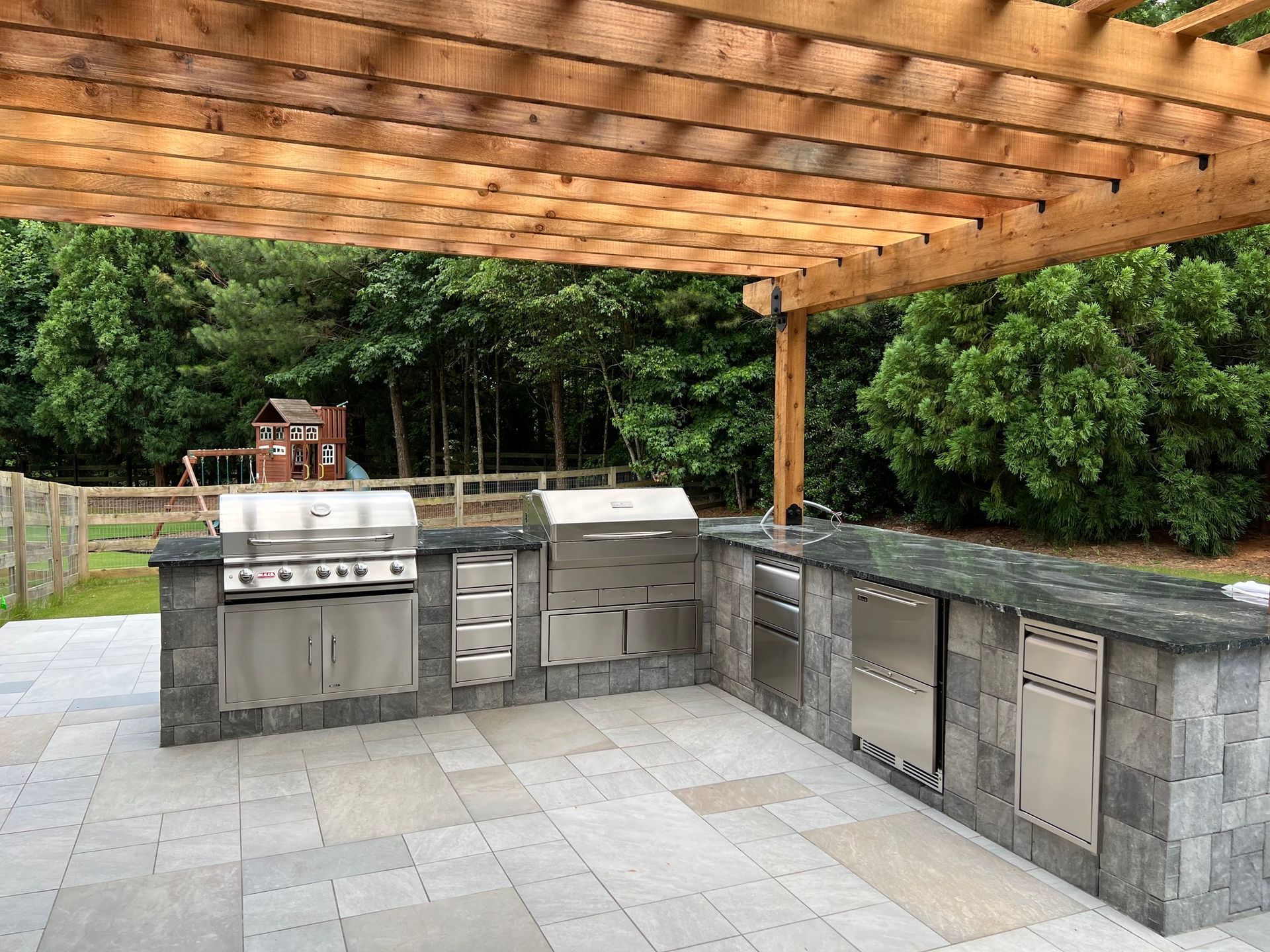
Fire pits and outdoor kitchens built into paver patios create destination spaces that extend the home's living area. These features appeal to buyers seeking turnkey outdoor entertaining options. Proper lighting along pathways and seating areas improves safety and ambiance, making the patio usable after dark.
How Does Proper Installation Affect Long-Term Value?
Professional installation with correct base preparation, drainage, and edge restraint prevents settling, weed growth, and surface unevenness that reduce patio lifespan and appeal.
Johns Creek's clay soil expands and contracts with moisture, demanding a well-compacted gravel base and proper drainage to prevent paver shifting. Installers excavate to the correct depth, add a geotextile fabric to block weeds, and compact multiple layers of gravel before laying pavers. Edge restraints keep pavers in place and maintain clean borders.
Polymeric sand swept into joints locks pavers together and resists weed growth and insect intrusion. Proper slope ensures water drains away from the home's foundation, preventing erosion and moisture problems. Families who want to explore retaining wall options in Johns Creek, GA often coordinate patio and wall construction to manage slopes and create level outdoor living areas that enhance both function and value.
What Maintenance Do Paver Patios Require?
Paver patios need periodic sweeping, occasional power washing, and joint sand replenishment to maintain appearance and structural integrity.
Regular sweeping removes leaves, dirt, and debris that can stain pavers or promote weed growth. Power washing once or twice a year clears embedded grime and restores color. Polymeric sand in joints may wash out over time, especially in high-traffic areas, and should be reapplied to keep pavers locked together and prevent shifting.
Sealing pavers is optional but enhances color and provides additional stain protection. Sealed pavers resist oil, grease, and organic stains, making cleanup easier. The sealant typically lasts two to three years before reapplication is needed. Even without sealing, properly installed paver patios remain attractive and functional for decades with minimal effort.
Do Paver Patios Perform Well in North Metro Atlanta's Climate?
Paver patios handle Georgia's heat, humidity, and seasonal rain effectively, with permeable designs that reduce runoff and improve drainage.
Pavers do not absorb and retain heat like solid concrete, making them more comfortable underfoot during summer. The joints between pavers allow water to drain through the surface, reducing puddling and runoff. This permeability benefits properties with drainage challenges or clay soil that does not absorb water quickly.
Pavers resist freeze-thaw damage better than poured concrete, though Georgia's mild winters rarely test this advantage. The individual units flex slightly with ground movement, preventing the large cracks common in concrete slabs. This durability ensures the patio remains level and attractive through years of use and weather exposure.
Forever Outdoors designs and installs custom paver patios using concrete, brick, and natural stone materials tailored to your Johns Creek property. Start a conversation with our team to explore design options, review material samples, and plan a patio that enhances your outdoor living space and home value.